 Global Gold DAO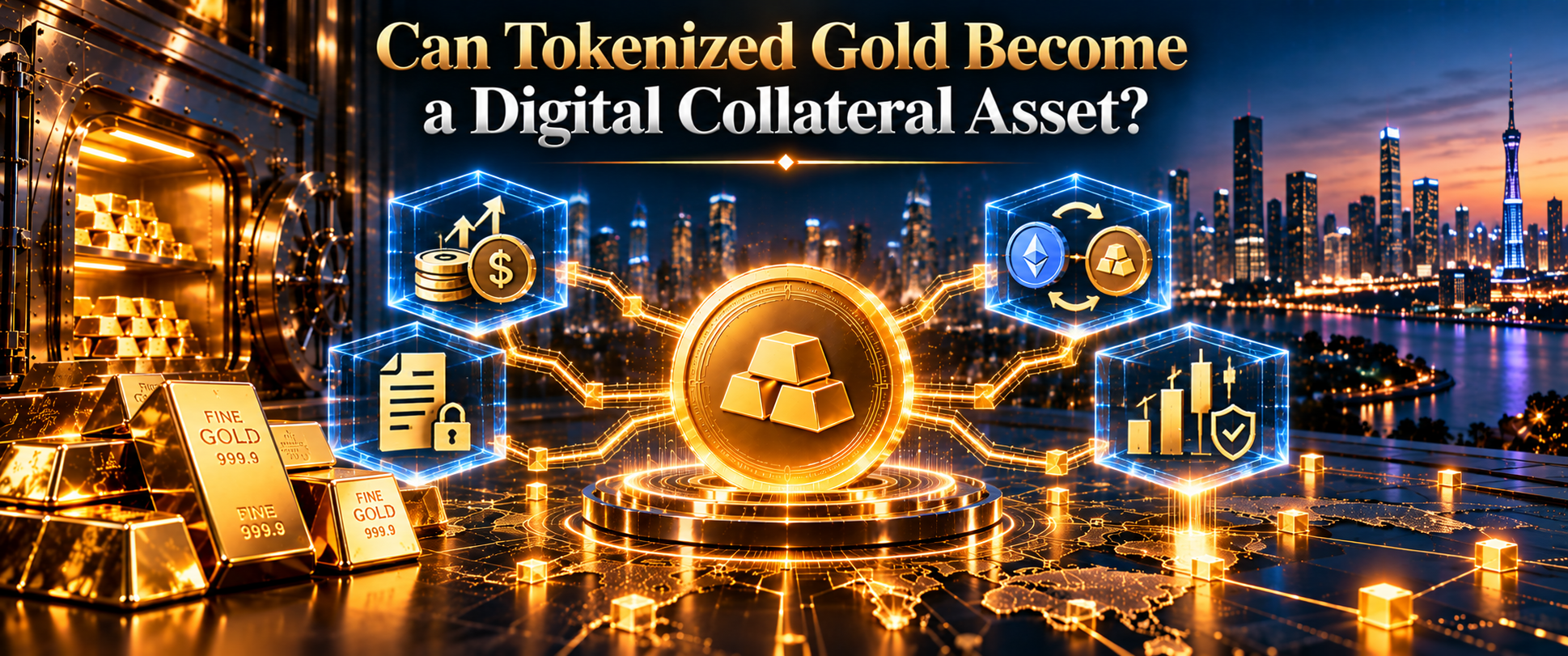
Gold has served as collateral in financial markets for centuries. Its global recognition and established trading infrastructure have made it useful in lending, trade finance and secured transactions. Now, blockchain technology is opening another possibility: using digital representations of gold as collateral in online financial markets.
The idea connects a traditional asset with a new financial system. Instead of transferring physical gold between institutions, a borrower may be able to deposit a gold-linked token into a compatible lending protocol. The protocol can then use that token to secure a loan, subject to its rules and risk controls.
This model already exists in parts of decentralized finance, although access and terms vary by asset and platform. Its wider development will depend on liquidity, reliable pricing, custody arrangements and the legal rights attached to each token.
How Does Tokenized Gold Work as Collateral?
Collateral is an asset that a borrower pledges to support a loan. If the borrower fails to meet the loan’s requirements, the lender may have the right to claim or liquidate the collateral under the applicable rules.
In traditional markets, borrowers may pledge cash, securities, property or physical gold. Tokenized gold introduces a digital alternative. A compatible lending platform can accept a supported token and lock it in a smart contract while the borrower accesses another asset.
The amount a user can borrow usually depends on the collateral’s market value and the platform’s risk parameters. A protocol may lend only a portion of the collateral’s value to provide a buffer against price changes. If the collateral value falls too far, the protocol may liquidate some or all of the position.
This process can happen without moving the underlying gold. The blockchain handles the digital token, while the asset’s issuer and custodian remain responsible for the off-chain structure.
DeFi Is Already Testing Gold-Backed Collateral
Gold-linked tokens have begun to enter established decentralized lending markets. Aave, for example, lists Tether Gold (XAUt) as collateral in its Ethereum Core market. Its published reserve information specifies a collateral factor of 75% for that market, although users should check current parameters before opening a position.
Aave has also advanced the integration of Paxos Gold (PAXG) into its V4 Ethereum Global Dollar Hub. The governance proposal describes PAXG as a gold-backed asset, with each token representing one fine troy ounce of London Good Delivery gold held in professional vaults. The proposed configuration treats PAXG as collateral rather than as an asset users can borrow directly from that reserve.
These examples show that gold tokens can play a role in DeFi lending. They also demonstrate why investors must examine each market separately. Protocols choose their own collateral factors, liquidation rules, caps and eligible assets. A token’s availability on one platform does not guarantee acceptance elsewhere.
Why Borrowers May Find Gold Collateral Useful
Tokenized gold can offer an alternative to selling a gold-linked position when a holder needs liquidity. A borrower may pledge a supported token to access another digital asset while retaining exposure to the gold market.
This can appeal to users who want to keep a gold allocation within a broader digital portfolio. Tokenization may also simplify the transfer of collateral between compatible applications, provided the relevant protocols support that movement.
However, borrowing against gold does not eliminate the cost of obtaining liquidity. Borrowers may pay interest or protocol fees, and they remain exposed to changes in the value of their collateral. If gold prices fall, a position that once had a comfortable buffer may approach its liquidation threshold.
The outcome also depends on the asset received through the loan. Borrowing a volatile cryptocurrency against gold, for example, creates a different risk profile from borrowing a dollar-linked asset.
The Risks Behind Digital Gold Lending
The first risk is price volatility. Gold prices can rise or fall, and a lending protocol must account for that movement when setting collateral requirements. If the token trades away from the underlying gold price, the discrepancy can create additional risk.
Liquidity presents another challenge. A protocol may accept a token as collateral, but the market may not have enough buyers to absorb large liquidations without significant price impact. This matters most during periods of market stress, when several users may need to sell collateral at once.
Smart contracts and price oracles also play critical roles. The contract manages collateral according to programmed rules, while an oracle supplies market data. A software vulnerability or unreliable price feed can affect how the protocol values collateral and when it triggers liquidations.
Finally, borrowers must understand the token itself. A gold-linked token may represent allocated bullion, an interest connected to an exchange-traded fund or another financial arrangement. These structures carry different legal rights and redemption conditions. A token’s use in DeFi does not remove the need to assess its issuer, custody arrangements and underlying asset.
What This Means for Gold on Chain
Gold on Chain’s Whitepaper describes GGT as its gold-value token, with one GGT representing the value equivalent of 0.001 troy ounces of gold. Its current underlying asset is CSOP Gold ETF (3030.HK), while the project plans to add directly held physical gold in a future phase.

The project also describes GGU as a synthetic USD-denominated value unit designed to help manage volatility, and GGD as the governance and ecosystem incentive token. These components serve different roles and should not be treated as interchangeable assets.
Gold on Chain’s published materials discuss potential DeFi uses for GGT, including lending-related applications. That design direction fits the broader trend toward making gold-linked assets more usable within blockchain financial systems. However, readers should distinguish a documented use case from a live lending market. They should verify current integrations and product availability before assuming that GGT can already serve as collateral on a specific protocol.
Could Gold Become a More Widely Used Digital Collateral?
The World Gold Council’s research on digital gold explores a future in which gold interests could move more easily through financial systems and support uses such as pledging and settlement. Achieving that vision will require more than issuing tokens. Market participants need reliable custody, clear legal ownership, consistent verification and sufficient liquidity.
Lending protocols must also manage the risks associated with each asset. A token that works well for simple transfers may not be suitable collateral if its market is thin or its redemption terms are unclear.
Tokenized gold therefore has a plausible role in digital collateral markets, but adoption will depend on the quality of the infrastructure around it. The opportunity lies in connecting gold’s established role as an asset with the flexibility of programmable finance, without overlooking the risks that come with borrowing and lending.
Frequently Asked Questions
Can tokenized gold be used as collateral?
Yes. Some DeFi lending markets already accept gold-linked tokens as collateral. Availability and borrowing limits depend on the protocol and asset.
Does using gold as collateral protect borrowers from liquidation?
No. If the collateral value falls or the loan breaches the protocol’s requirements, the platform may liquidate the position.
Can every gold token be used in DeFi lending?
No. Each protocol decides which tokens it supports. Liquidity, price data, token controls and the underlying asset structure can affect eligibility.
Can GGT be used as collateral today?
Gold on Chain’s materials discuss potential DeFi uses for GGT, but users should verify whether a specific lending integration is currently live before relying on it.
Conclusion
Tokenized gold is beginning to bridge traditional collateral markets and decentralized lending. It can allow eligible holders to use gold-linked assets without first selling them, while smart contracts manage the digital side of the loan.
Yet the model still depends on sound collateral parameters, reliable pricing, market liquidity and a clear connection to the underlying asset. As more lending protocols evaluate tokenized commodities, those fundamentals will matter as much as the technology itself.