 Global Gold DAO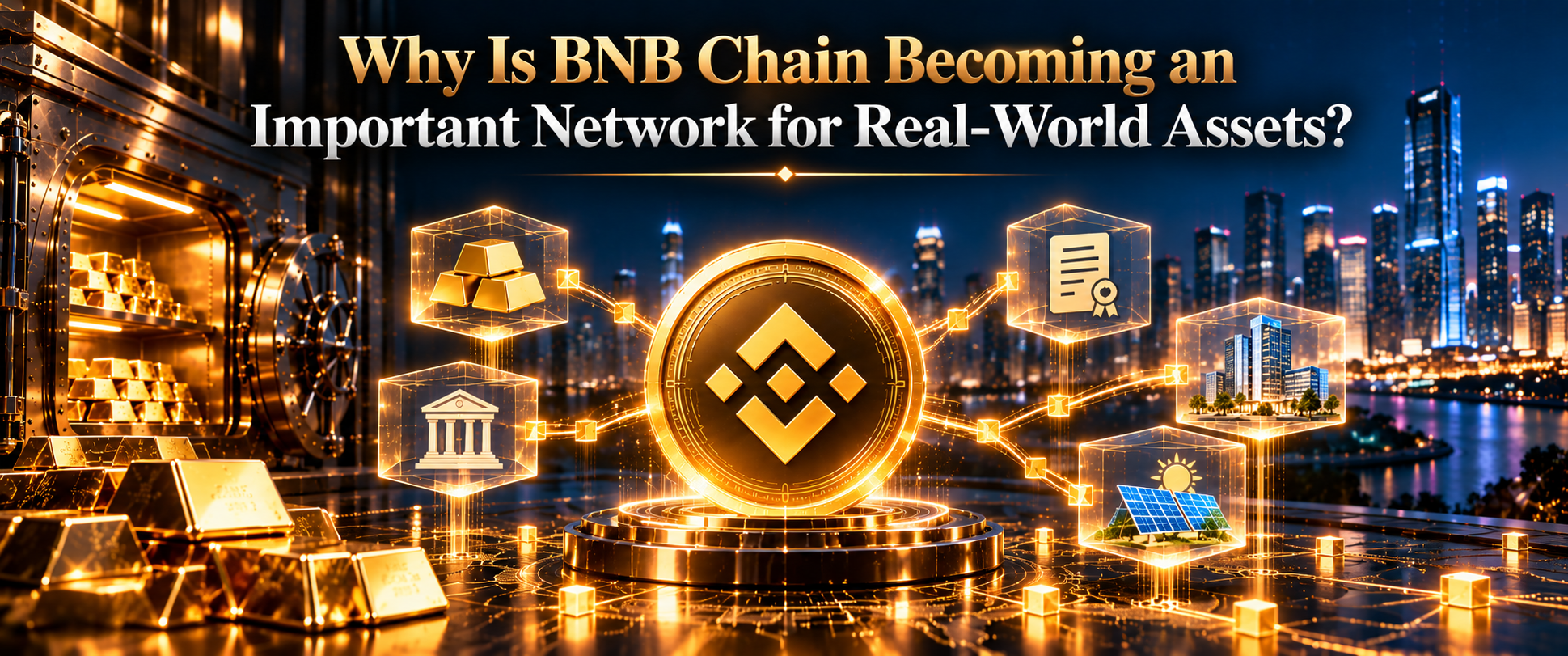
The tokenization of real-world assets has entered a new phase. Financial institutions and blockchain companies are no longer asking only whether traditional assets can exist on-chain. They are also examining how investors can transfer, trade and use those assets within digital financial markets.
BNB Chain has become part of that discussion. Its ecosystem includes tokenized financial products, precious metals and other real-world assets. The network also connects these products with decentralized exchanges and lending protocols, giving issuers a route beyond token creation alone.
Yet a blockchain’s role in tokenization involves more than transaction speed or low fees. Issuers must also consider compliance, custody, liquidity and the legal rights attached to each token. These factors help explain why infrastructure matters as the RWA market develops.
From Asset Tokenization to Financial Infrastructure
Real-world asset tokenization converts rights or exposure linked to an asset into digital tokens on a blockchain. The underlying asset might be a government bond, a fund, a commodity or a property interest. The token then provides a digital format for representing and transferring the relevant rights, subject to the product’s legal structure.
The first challenge is issuing the token correctly. The next is making it useful. Holders may want to transfer it, trade it, use it as collateral or connect it with other financial applications. Each step requires infrastructure that supports the token’s technical design and legal restrictions.
BNB Chain has developed its RWA ecosystem around this broader process. Its official tokenization materials highlight issuance, on-chain settlement and access to DeFi liquidity. The network also lists products across several asset categories, including tokenized gold, U.S. Treasury products, equities and money market funds.
This breadth matters because a token becomes more useful when the surrounding market can support it. But availability on a blockchain does not automatically mean that every token can enter every DeFi application. Issuers may impose eligibility rules, wallet restrictions or other compliance controls.
Why Transaction Costs and Network Performance Matter
Traditional financial markets rely on established systems to record ownership and settle transactions. Blockchain networks offer another way to process digital transfers, but their practical value depends partly on cost, speed and reliability.
BNB Chain promotes low transaction fees and fast finality as advantages for RWA applications. These features can reduce the friction involved in moving tokens and interacting with smart contracts. They may also make smaller transactions more practical, depending on the asset and its market structure.
However, low fees alone do not guarantee a successful tokenization market. A token still needs buyers and sellers, reliable pricing and clear rules for transfers and redemption. Network performance addresses the technical layer; it cannot solve every problem in the underlying financial product.
Liquidity Is the Next Test
The RWA market faces a challenge that goes beyond issuing digital tokens: creating useful markets for them.
A token may exist on-chain but still have limited trading activity. Without sufficient liquidity, buyers may struggle to trade at a reasonable price, especially during periods of market stress. Issuers must therefore consider how their products connect with exchanges, liquidity providers and other financial applications.
BNB Chain’s ecosystem includes connections to DeFi platforms such as PancakeSwap, Venus and Lista. These integrations can provide routes for trading or financial use where the specific asset and application permit it. The actual liquidity available to a token still depends on its market, trading pairs, restrictions and user demand.
This is an important shift in the RWA conversation. The question is no longer simply whether a traditional asset can be represented digitally. It is whether that representation can participate in a functioning financial market.
Compliance and Custody Remain Essential
Real-world assets differ from purely digital tokens because they depend on legal arrangements and institutions outside the blockchain. A token linked to a fund, for example, may rely on a fund manager, custodian, administrator and legal issuer. The blockchain cannot replace all of these responsibilities.
BNB Chain’s RWA materials describe infrastructure and partner services that can support compliance requirements, including identity checks and restrictions on eligible holders or transfers. Different issuers may use different approaches, depending on the asset and the jurisdictions involved.
These controls can help connect on-chain markets with regulated financial products. They also introduce complexity. A token that trades freely in one context may face restrictions in another. Investors need to understand the legal rights attached to a product rather than assume that blockchain access removes regulatory obligations.
Custody presents a related challenge. Public blockchain records can show token balances and transfers, but they cannot independently prove that the underlying asset exists. Reliable asset reporting and verification remain necessary.
Where Tokenized Gold Fits In
Gold provides a useful example of how traditional assets can enter blockchain infrastructure. The metal has established global markets, but physical storage and transfer require specialist institutions. Tokenization creates a digital layer that can support transfers and integration with other applications without necessarily moving the underlying asset.
BNB Chain’s RWA ecosystem includes gold-linked tokens such as Tether Gold (XAUt) and other tokenized-gold products. Their presence illustrates how a blockchain can host assets with different issuers and structures. It does not mean that all products offer identical ownership rights, redemption options or custody arrangements.

Gold on Chain also identifies BNB Chain as the initial network for its ecosystem. Its current Whitepaper describes GGT as a gold RWA token linked to CSOP Gold ETF (3030.HK), with one GGT corresponding to the value equivalent of 0.001 troy ounces of gold. The project plans to add directly held physical gold in a future phase.
The project also uses GGU as a synthetic USD-denominated value unit and GGD for governance and ecosystem incentives. These components form part of Gold on Chain’s proposed infrastructure, but they should not be taken as evidence that every planned application or integration is already live.
What Will Determine the Next Stage of RWA Growth?
Blockchain infrastructure can help issuers distribute digital assets and connect them with on-chain markets. Long-term growth, however, will depend on more than technical performance.
Investors need confidence in the underlying assets, clear legal rights and dependable redemption arrangements. Issuers need suitable compliance systems and access to liquidity. Applications also need to manage smart-contract risk and the operational challenges of connecting on-chain records with off-chain institutions.
BNB Chain’s growing range of RWA products suggests that the ecosystem is developing beyond isolated tokenization experiments. The next test will be whether these products can support lasting demand and practical financial use.
The wider significance is clear: successful RWA infrastructure must connect the asset, the legal framework, the blockchain and the market around it. A network can provide important building blocks, but trust and adoption depend on how issuers and service providers use them.
Frequently Asked Questions
What makes BNB Chain relevant to real-world asset tokenization?
BNB Chain offers blockchain infrastructure for issuing and transferring tokens, alongside connections to DeFi applications. Its ecosystem includes products linked to financial instruments, commodities and other real-world assets.
Can tokenized gold trade on BNB Chain?
Yes. The network hosts gold-linked products, including Tether Gold. Each product has its own issuer, legal structure and redemption conditions.
Does launching an RWA on BNB Chain guarantee liquidity?
No. Liquidity depends on trading activity, market makers, available trading pairs and the restrictions attached to the token.
Is Gold on Chain built on BNB Chain?
Gold on Chain’s current Whitepaper identifies BNB Chain as its initial network. Its current GGT underlying asset is CSOP Gold ETF, while the project plans to add directly held physical gold in a future phase.
Conclusion
BNB Chain’s role in real-world asset tokenization reflects a broader change in the digital-asset market. Issuers increasingly need infrastructure that supports not only token creation, but also transfers, settlement and potential financial use.
The network provides several of these building blocks through its blockchain and DeFi ecosystem. Still, technical capability is only one part of the equation. Clear legal rights, reliable custody, compliance and sustainable liquidity will determine whether tokenized assets can move from issuance to meaningful use.