 Global Gold DAO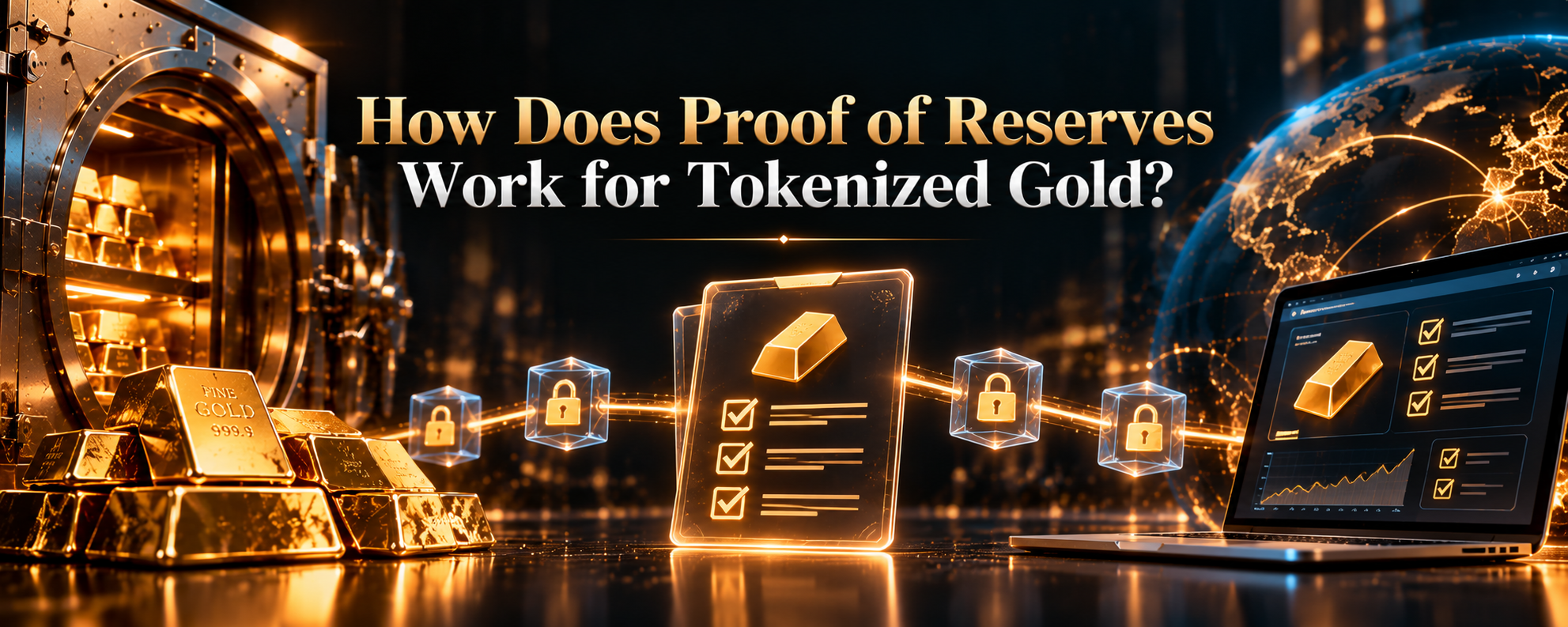
Tokenized gold connects one of the world’s oldest stores of value with blockchain technology. But this combination raises an important question: how can investors know that a digital token represents the gold or gold-linked assets it claims to represent?
A blockchain explorer can show token balances and transactions. It cannot confirm whether an asset held outside the network actually exists. Nor can it establish who legally owns that asset or whether the issuer can meet its obligations.
This is where proof of reserves comes in. The process connects digital token records with evidence about underlying assets. Depending on the product, that evidence may include custody records, financial statements, independent attestations and audit reports. The quality of these checks determines how much confidence investors can place in the results.
What Is Proof of Reserves?
Proof of reserves aims to show whether an institution or digital-asset product holds the assets it claims to have. For tokenized gold, the process compares the relevant gold or gold-linked holdings with the tokens in circulation.
The exact requirements depend on the product’s structure. A token linked to allocated gold bars requires different evidence from one that represents exposure through an exchange-traded fund. Legal rights also matter. A company may hold assets without giving every token holder a direct claim over them.
Investors should therefore look beyond a headline reserve figure. They need to know what supports the token, which entity holds the underlying asset and how the product defines ownership. They should also understand how the issuer counts outstanding tokens and what happens if the company or a service provider becomes insolvent.
These details help distinguish a meaningful verification process from a simple statement of backing.
Why Blockchain Data Is Not Enough
Public blockchains offer an important advantage: anyone can often inspect token transactions and balances. Researchers can examine issuance events, transfers and the total supply recorded by a token contract.
However, these records tell only part of the story. They show what happens on-chain, not what happens inside a vault, bank account or securities account.
Imagine a token contract with one million tokens in circulation. Anyone can check that figure on the blockchain. But the same data cannot confirm whether the issuer holds enough underlying assets to support those tokens.

That question requires evidence from the relevant custodian, fund manager, trustee or other institution responsible for the assets.
This distinction sits at the heart of digital-asset transparency. On-chain records must connect with reliable off-chain evidence before investors can assess whether a token’s reported backing matches its supply.
The World Gold Council explored this challenge in its 2026 research, Digital Gold: The Case for a Shared Infrastructure. The report examines how digital-gold systems could coordinate custody information, token issuance and ownership records. It also discusses reconciliation systems that compare underlying assets with outstanding digital units and flag discrepancies.
How Verification Works in Practice
A credible proof-of-reserves process starts by identifying the asset behind the token. For physical gold, this may involve records of each bar’s weight, purity and location, along with details about the custodian. For an ETF-based product, the review may instead examine fund units, the fund’s asset disclosures and the legal arrangements that connect those units to the token.
Next, the reviewer establishes how many tokens exist at a specific point in time. Blockchain data can often provide this figure. The calculation may also need to account for burned tokens, special contracts and the product’s issuance or redemption rules.
The reviewer then compares the token supply with the relevant asset records. Independent attestations and audits can strengthen the process, depending on their scope and frequency. A useful report explains which assets the reviewer examined, when the assessment took place and what limitations apply.
Ongoing reconciliation can help identify discrepancies between digital records and asset holdings. Still, continuous monitoring and a periodic audit serve different purposes. Neither guarantees that the asset coverage will remain unchanged at every moment.
Why the Underlying Asset Matters
Not every tokenized gold product has the same relationship with gold. Some products use physical bullion held in custody. Others obtain gold exposure through a fund or ETF. More complex products may rely on other financial arrangements.
These structures can all provide gold exposure, but they do not necessarily offer the same rights or risks. Investors must examine the legal documents and verification methods that apply to each product.
Gold on Chain’s current Whitepaper identifies CSOP Gold ETF (3030.HK) as the underlying asset for GGT. The project defines one GGT as the value equivalent of 0.001 troy ounces of gold. It also outlines a future plan to expand the underlying structure to include directly held physical gold alongside the ETF.

This distinction matters. The current ETF-based structure should not be confused with a product that already holds a separately allocated gold bar for every token. The verification process must reflect the assets that actually support the token today.
For an ETF-based product, reviewers need to examine the relevant fund holdings and the legal arrangements connecting the fund to the token. If the project changes its underlying assets in the future, its disclosures and verification process should change accordingly.
What Proof of Reserves Cannot Guarantee
Proof of reserves can provide useful evidence, but it does not eliminate every risk.
A report may confirm certain assets on a particular date without proving that the same coverage will continue. It may also leave questions about liabilities, asset segregation and legal ownership unanswered.
The source of the evidence matters, too. A statement prepared by the issuer does not carry the same weight as an independent examination. And a smart-contract audit addresses different risks from an audit of the underlying assets. Even a secure token contract cannot prove that gold exists in a vault.
A stronger approach combines transparent issuance records, reliable custody documentation, clear legal rights and independent verification. It should also explain how the issuer investigates discrepancies and what happens if the available evidence no longer supports its claims.
Investors should focus not only on whether a project publishes reserve information, but also on who verifies it, what the report covers and how often the reviewer updates it.
What Gold on Chain Discloses About Transparency
Gold on Chain has a dedicated transparency page that describes its intended disclosures for GGT’s underlying assets and the GGU risk reserve. The page identifies asset-holdings reports, valuation reports and smart-contract security audits as parts of its transparency framework.
However, the page currently marks key figures and reports as pending disclosure. It also lists GGT supply and the first underlying holding as pending mainnet-related status.
These details are important. A planned reporting framework does not amount to completed reserve verification. Investors should distinguish between a project’s stated intentions and evidence that it has actually published.
As Gold on Chain releases more information, readers should examine the reports themselves. Publication dates, review scope, methodology and the identity of the verifying party all help determine what the evidence can support.
The Future of Trust in Tokenized Gold
As tokenized assets become more integrated with financial markets, verification will play a growing role in establishing credibility. Investors will want to know what a token represents, who holds its underlying assets and how independent parties can check the relevant records.
The World Gold Council’s research explores a model that connects custody, issuance, reconciliation and redemption through shared digital infrastructure. Such a system could make tokenized gold easier to assess and help market participants identify discrepancies between digital records and underlying assets.
Ultimately, proof of reserves is about more than publishing a number. It helps investors understand the relationship between a token and its underlying assets. The strongest systems make that relationship clear, verifiable and legally meaningful.
Frequently Asked Questions
Does proof of reserves prove that tokenized gold is fully backed?
Not by itself. A reserve report can provide evidence of asset coverage, but its value depends on the scope, independence and timing of the review. It may not address every liability or legal claim.
Can a blockchain verify physical gold in a vault?
No. Blockchain data can confirm token balances and transactions. Custody records, independent attestations or audits must provide evidence about physical holdings.
Is every tokenized gold product backed by physical gold?
No. Some products obtain gold exposure through ETFs or other financial structures rather than directly allocated bullion. Investors should examine each product’s underlying assets and legal arrangements.
Has Gold on Chain published its reserve reports?
Gold on Chain’s transparency page describes the planned reports but currently marks key reserve figures and reports as pending disclosure. Readers should check the page for the latest information.
Conclusion
Tokenized gold can connect gold exposure with the flexibility of blockchain technology. But the credibility of that connection depends on evidence beyond the blockchain itself.
Clear asset definitions, reliable custody records, independent verification and enforceable legal rights all help investors assess a token’s backing. The strongest products will not rely on claims alone. They will explain what supports each token, how reviewers verify that support and what the available evidence can—and cannot—prove.