 Global Gold DAO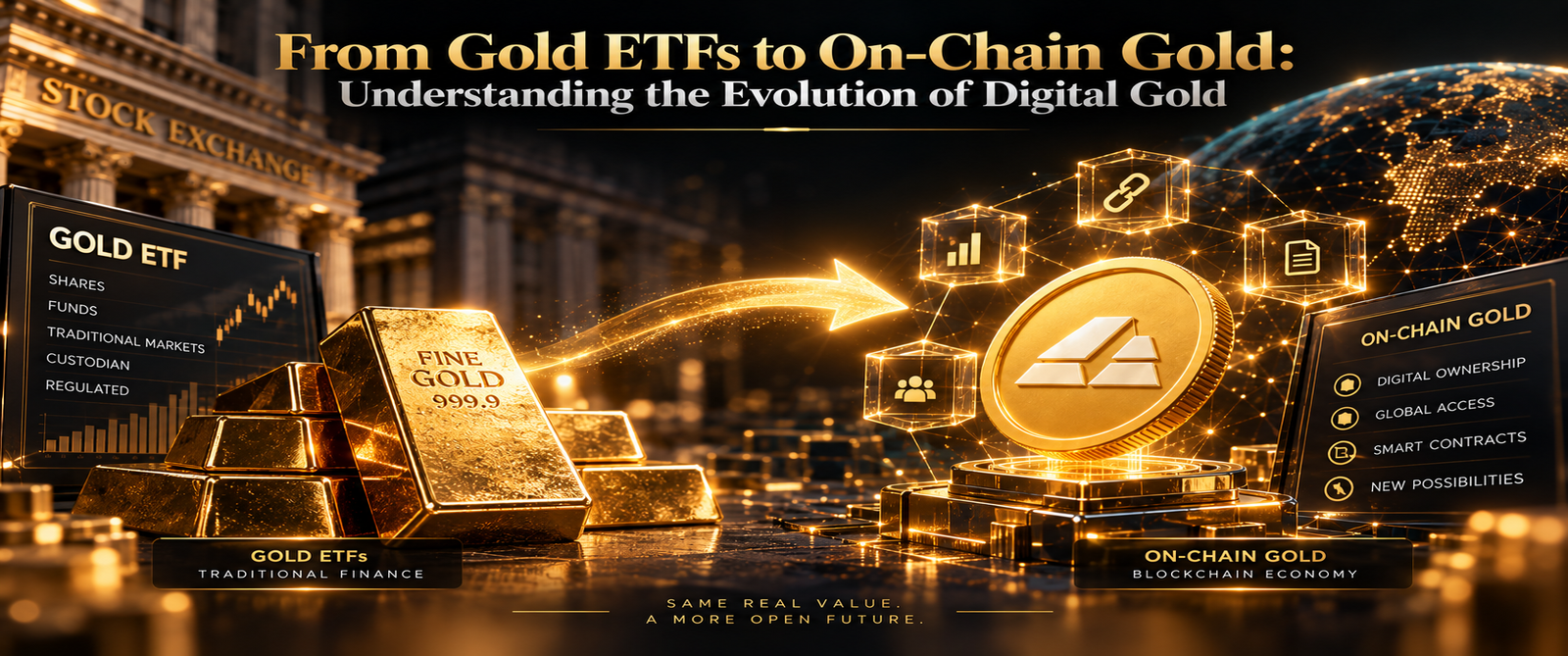
The way people interact with gold has changed significantly over time.
Physical bullion created direct ownership of a tangible asset. Gold ETFs introduced a more accessible financial-market structure. Now, blockchain technology is creating another stage: on-chain gold.
This evolution is not simply about replacing one form of gold with another. Each model introduces different infrastructure and capabilities.
From Physical Gold to Gold ETFs
For centuries, gold ownership primarily meant owning physical bullion.
Bars and coins provide a tangible form of gold ownership, but physical assets also require storage, transportation, security and specialized handling.
Gold ETFs introduced another model.
Instead of personally holding gold bars, investors can hold shares in a financial product designed to track gold-related value.
This made gold exposure easier to integrate with traditional financial markets.
What Is On-Chain Gold?
On-chain gold refers to gold or gold-related value represented and managed through blockchain infrastructure.
Instead of existing exclusively inside a traditional financial system, the digital representation can operate through blockchain networks.
This can introduce capabilities such as:
- On-chain transfers
- Digital wallets
- Smart-contract interaction
- Programmable transactions
- Integration with Web3 applications
The exact capabilities depend on the design of each project.
Why Is Blockchain Relevant to Gold?
Gold itself has not changed.
The innovation is in the infrastructure surrounding gold-related value.
Blockchain can create a digital layer where tokens can be transferred between compatible addresses and interact with smart contracts.
This can potentially make gold-related assets more compatible with the broader digital-asset ecosystem.
The UK’s Financial Conduct Authority is currently examining this development. In September 2026, the FCA launched a call for input on whether tokenizing gold could improve how gold is traded, transferred, pledged and held in UK wholesale markets.
The RWA Connection
On-chain gold is part of the broader Real-World Asset (RWA) movement.
The basic concept is:
Traditional asset → legal/financial structure → digital token → blockchain ecosystem
Gold is particularly suitable for this discussion because it already has a globally established market and standardized valuation.
CoinGecko’s 2026 RWA report found that tokenized commodities reached approximately $5.5 billion by the end of Q1 2026, driven largely by gold-backed tokens.
Gold on Chain: Bringing Gold Value On-Chain
Gold on Chain is building its ecosystem around this transition.
The project’s current architecture uses three main components:
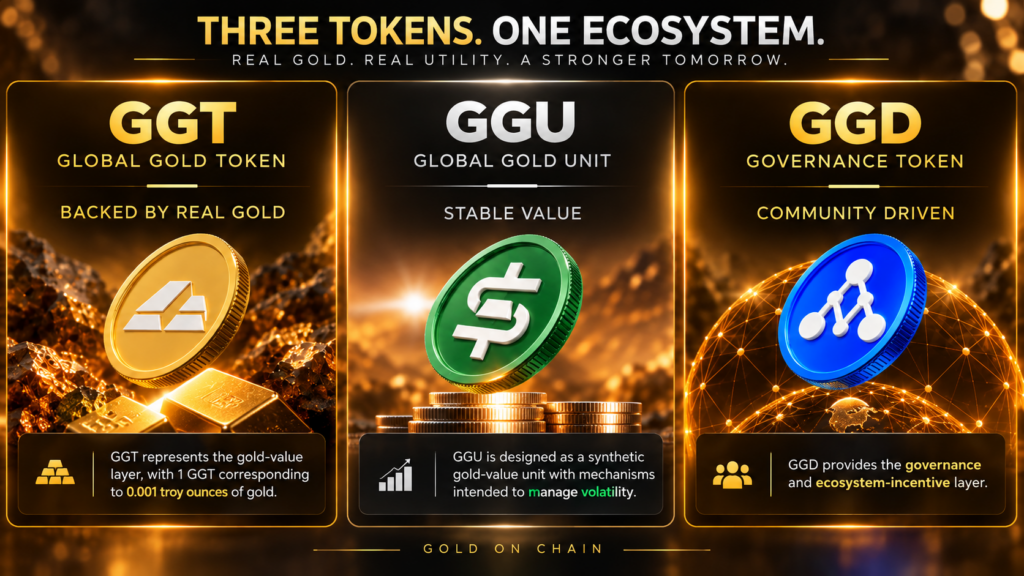
The current underlying asset for GGT is the CSOP Gold ETF (3030.HK), while the Whitepaper describes a planned transition toward an ETF-plus-physical-gold structure.
What Changes When Gold Goes On-Chain?
Moving gold-related value onto blockchain infrastructure can introduce several new possibilities.
1. Digital Transfer
Tokens can potentially move between compatible blockchain addresses without using traditional securities settlement infrastructure.
2. Programmability
Smart contracts can define how digital assets are issued, transferred, converted or integrated with other applications.
3. Composability
Tokenized gold can potentially interact with other blockchain-based assets and financial applications.
4. Global Digital Infrastructure
Blockchain networks operate continuously, allowing digital assets to exist outside traditional market-hour structures.
These characteristics are part of the broader reason why tokenized RWAs are attracting attention from both blockchain projects and financial institutions.
The Future of Digital Gold
The development of digital gold is moving beyond the simple question of how to represent gold electronically.
The next question is how gold-related assets can interact with blockchain infrastructure, digital settlement, smart contracts and Web3 applications while maintaining appropriate custody, legal and compliance structures.
Gold ETFs helped create a digital interface for traditional gold markets.
Tokenization introduces another layer: on-chain infrastructure for gold-related value.
Gold on Chain is developing within this broader transition, combining GGT, GGU and GGD into an ecosystem designed around gold value, volatility management and decentralized governance.
Conclusion
The evolution of gold can be viewed through several stages:
Physical Gold → Gold ETFs → Tokenized Gold → On-Chain Gold Ecosystems
Each stage introduces different ways to access, transfer and interact with gold-related value.
Blockchain does not change the fundamental nature of gold. Instead, it creates new infrastructure around how gold-related value can be represented and used.
As RWA tokenization continues to develop, on-chain gold is becoming an increasingly important part of the conversation about the future of digital assets.
FAQ
What is on-chain gold?
On-chain gold refers to gold or gold-related value represented and managed through blockchain infrastructure.
Is an on-chain gold token the same as physical gold?
Not necessarily. The underlying asset and legal rights depend on the specific token structure.
What is the difference between gold ETFs and on-chain gold?
Gold ETFs operate through traditional financial markets, while on-chain gold uses blockchain infrastructure for its digital representation and potential transfer.
What does GGT represent?
GGT is the gold-value layer of Gold on Chain, with a reference of 0.001 troy ounces of gold per GGT.